
HUMAN OS
Companies are upgrading their AI, software, and systems faster than ever. But most are ignoring the humans running them.
Pain, burnout, fatigue, brain fog, and performance loss are not just wellness problems. They're human operating-system problems.
The companies that pull ahead over the next decade will not be the ones with the best perks. They'll be the ones that optimize the people behind the performance.
Because when the human system breaks down, everything downstream gets more expensive:
Productivity · Focus · Energy · Retention · Creativity · Healthcare costs · Workers' comp · Decision-making · Leadership performance

01 SLEEP
Sleep is the foundation every other pillar depends on.
Poor sleep doesn’t just create fatigue. It affects pain, recovery, focus, mood, decision-making, and performance. You spend hours every night either supporting recovery or reinforcing the same positions and patterns your body is trying to recover from.
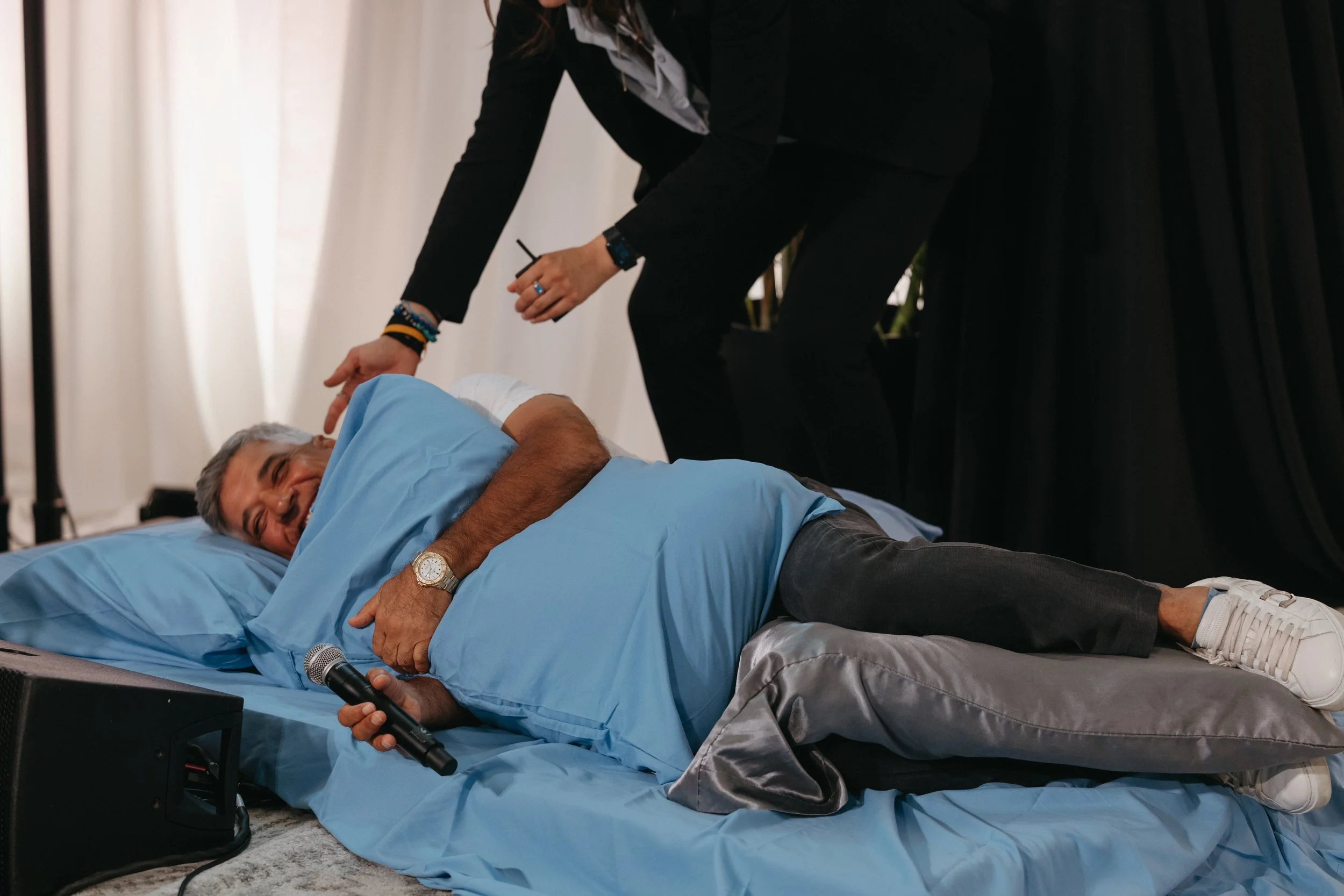
Human OS analyzes sleep as a performance system, including The 4-Pillow Method, a positioning protocol designed to support alignment and recovery overnight without requiring a new mattress.
Positioning · The 4-Pillow Method · Breathing · Recovery · Light exposure · Nervous system regulation
Because recovery is not passive. It is trained nightly.

02 DEVICES
How are you looking at your device to read this right now?
Chin dropped. Shoulders rounded. Neck craned forward. Now multiply that position by every scroll, text, email, and notification throughout the day.
Human OS treats device use like a training variable, because it is one. Every repetition is teaching the body something. We change how your team uses technology, not whether they use it.
Neck and jaw loading · Phone position · Screen habits · Repetitive strain · Simple changes before discomfort becomes a bigger problem
Your device isn't the problem. How you use it is.

03 WORKSTATION
Your workstation is training your body for 8 hours a day.
Most companies treat ergonomics like a furniture problem. A better chair helps, but it cannot fix the positions and patterns someone repeats all day.
Human OS optimizes the workstation so the workday supports performance instead of quietly breaking it down.
Desk, chair, and monitor setup · Micro-postures that compound over hours · Device placement · Small adjustments with outsized impact
We don't just add exercise to the day. We optimize the repetitions already shaping the body.

04 TRAVEL
Most executives treat travel like lost time. Human OS treats it like training time.
Modern travel trains the body toward stiffness, disrupted sleep, fatigue, and reduced performance through hours of sitting, broken routines, and constant transitions.
Dr. Fontenot uses “Movement snacks” throughout travel. Small enough to use almost anywhere. Effective enough to matter.
Pre-flight, in-flight, and in-transit movement · Hotel sleep setup · Airport, car, and train positioning · Luggage and carrying habits
Frequent travel should not automatically mean feeling worse when you arrive.

05 MOVEMENT
What if better movement wasn't about adding more to your day, but improving the movement already happening within it?
Human OS improves the movement your body is already repeating all day. The body doesn’t only adapt to workouts. It adapts to repetition.
Gait and walking mechanics · Breathing patterns and rib positioning · Sitting, standing, and daily movement habits · The repetitive patterns shaping pain and performance
Because the body adapts to what it repeats most.

06 RECOVERY
Recovery is not the absence of activity. It is a system.
Rest and recovery are not the same thing. The body needs the right movement, positions, inputs, and environment to recover well.
Human OS identifies the habits that support recovery and the ones quietly undoing progress between workdays, workouts, and travel.
Recovery positioning · Movement when activity is limited · Breaking patterns that reinforce discomfort · Building recovery into the workday
Recovery works better when the system supports it.

Bring Human OS inside your company.
Workshops and individual care built around the habits affecting your team’s pain, energy, and performance.